










When Feed Safety Becomes Uncertain: Mycotoxins, Volatility and the Shift Toward Greater Feed Control

Feed has always been the largest cost component in poultry production. In many Asian markets, it accounts for up to 70% of total production cost. What is changing today is not just the price of feed, but the level of uncertainty surrounding it.
Two forces are converging.
First, the increasing presence of mycotoxins in grain-based feed. Second, rising volatility in global feed supply and pricing driven by geopolitical disruption.
Together, they are reshaping how producers think about feed. It is no longer only a question of cost. It is a question of safety, consistency, and control.
The Growing Challenge of Mycotoxins in Feed
Mycotoxins are toxic compounds produced by moulds that develop in crops such as corn, wheat, and soybeans. Their occurrence is closely linked to environmental conditions such as humidity, temperature, and rainfall patterns.
In Asia, these conditions are often ideal for fungal growth.
The challenge is not only their presence, but how difficult they are to detect and manage.
- Contamination is uneven and can be concentrated in small portions of a grain batch
- Visual inspection is not reliable as a detection method
- Mycotoxins remain stable during processing and cannot be easily destroyed by heat
Once present, they move through the entire feed chain and into animal production systems
Why Mycotoxins Matter at Farm Level
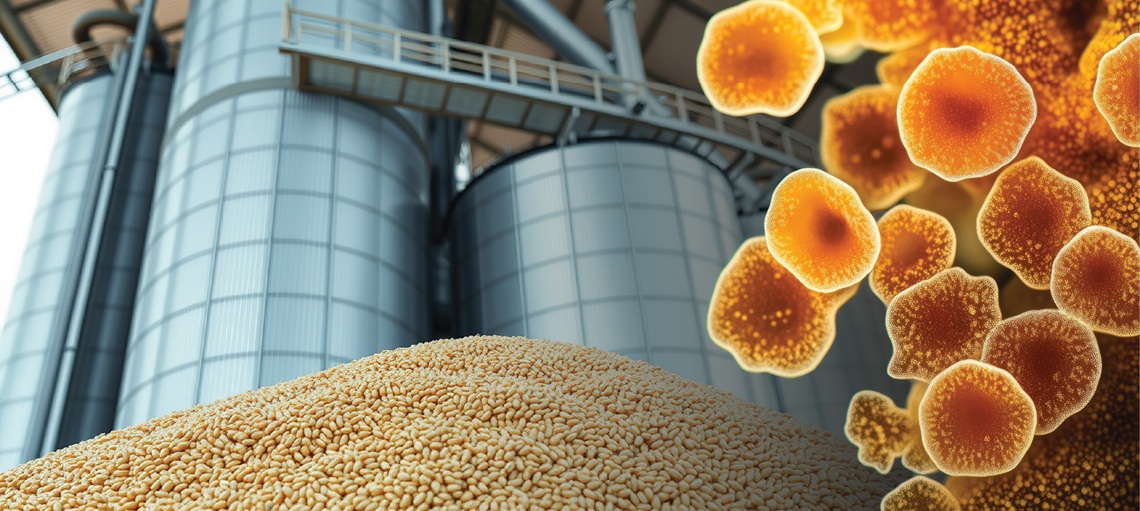
The impact of mycotoxins is often gradual rather than immediate, which makes them harder to identify.
They can affect:
- Feed intake and nutrient absorption
- Growth rates and feed conversion efficiency
- Immune response and disease susceptibility
- Overall flock uniformity
These effects are often misattributed to management or environmental issues, when the underlying cause is feed quality.
Typical Mitigation Approaches and Their Limits
Most feed operations rely on a combination of testing, additives, and storage control.
| Approach | Role | Limitation |
| Sampling and testing | Detect contamination levels | Results depend heavily on sampling accuracy |
| Mycotoxin binders | Reduce absorption in animals | Do not eliminate contamination |
| Storage management | Prevent further fungal growth | Does not address existing toxins |
| Reformulation | Adjust ingredient composition | Limited by ingredient availability |
These methods remain necessary, but they are largely reactive. They manage risk after contamination has already entered the system.
A Parallel Pressure: Feed Cost and Supply Volatility
At the same time, the feed market itself is becoming less predictable. Geopolitical tensions – whether short term or prolonged – are affecting fuel prices and global logistics. This creates a chain reaction:
- Higher fuel costs increase transportation and shipping expenses
- Grain and oilseed prices fluctuate with supply disruptions
- Import-dependent markets in Asia face increased exposure
Feed producers are dealing with both price uncertainty and supply variability, in addition to feed safety and quality. In some cases, access to consistent quality ingredients becomes a challenge.
At farm level, these issues do not exist separately. They combine to create a more complex risk environment.
| Risk Area | Impact on Farm |
| Mycotoxins | Reduced performance and hidden health issues |
| Feed price volatility | Increased production cost and margin pressure |
| Supply inconsistency | Variable feed quality and formulation challenges |
This convergence changes how feed is perceived. It becomes both a biological risk and a financial risk.
A Shift Toward Greater Control
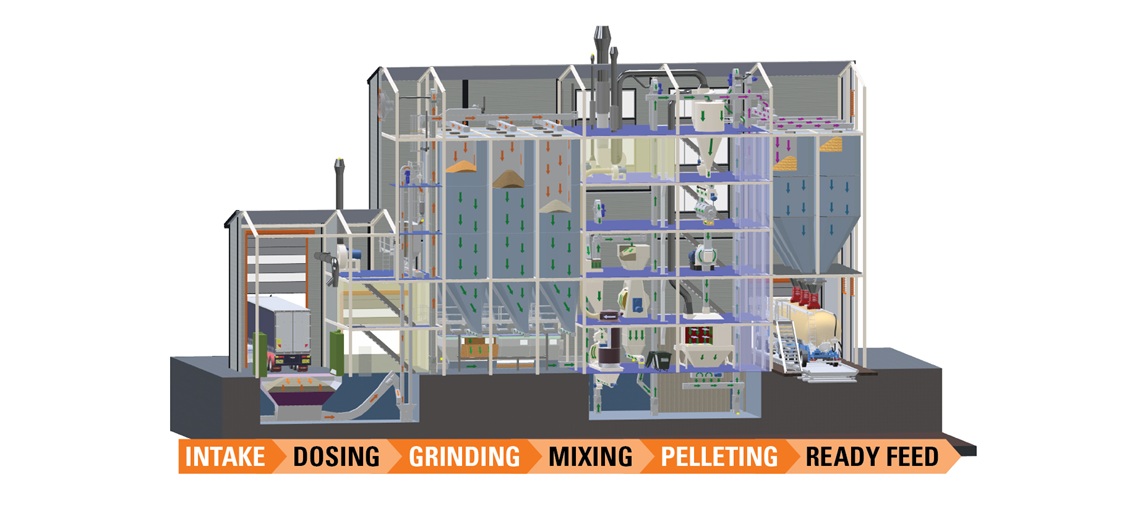
In response, there is a growing shift in how producers approach feed management. The focus is moving toward control in three areas:
1. Ingredient Visibility
Knowing the origin and quality of raw materials
2. Handling and Processing
Reducing contamination risk during storage and preparation
3. Freshness and Consistency
Ensuring feed is produced and delivered in a controlled, timely manner
One important development is the use of physical cleaning and sorting techniques before milling.
These methods target the parts of the grain where contamination is most concentrated.
- Dust, broken kernels, and low-density grains often carry the highest toxin levels
- Removing these fractions can significantly reduce overall contamination
Studies and industrial trials have shown that combining cleaning methods such as sieving, aspiration, and optical sorting can reduce mycotoxin levels by 70 to 95%.
The Role of On-Farm Feed Milling Solution from Big Dutchman
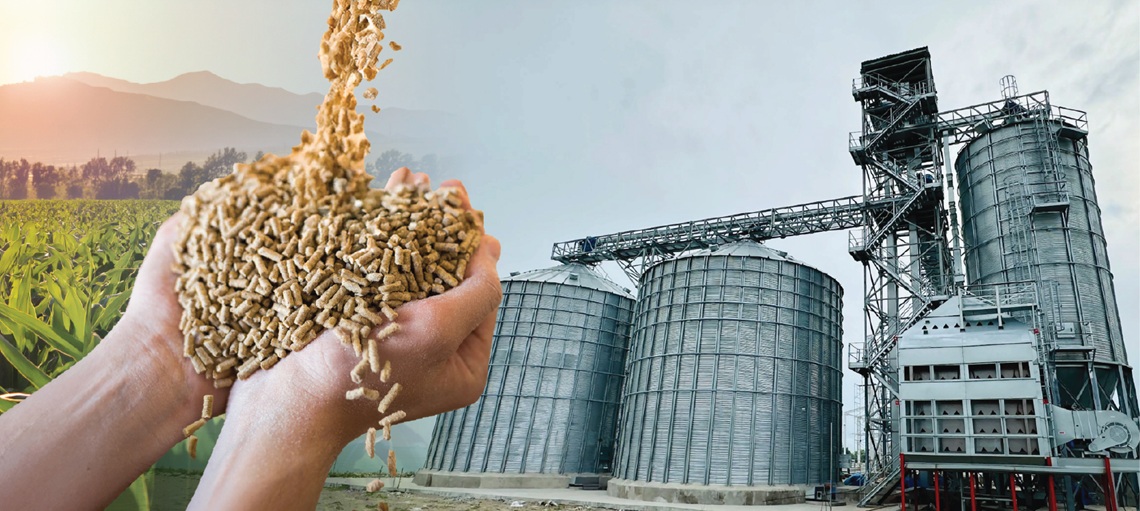
Within this shift toward control, On-farm Feed Milling is gaining attention as a practical approach. Instead of relying entirely on externally processed feed, producers are bringing parts of the feed production process closer to the farm.
This changes several aspects of feed management.
Greater Control Over Ingredients
Producers can select and manage raw materials directly, including the use of locally sourced grains
Improved Feed Safety
Cleaning and sorting can be applied before milling, targeting contaminated fractions early in the process
Reduced Dependency on External Supply Chains
Shorter supply chains reduce exposure to transport disruptions and price fluctuations
Better Freshness and Consistency
Feed can be produced closer to the point of use, reducing storage time and variability
Integrated Farm Management
On-farm systems can be connected with broader farm operations, supporting a more circular and efficient production model
Feed is becoming a more complex component of poultry production, with safety, cost, and availability are increasingly interconnected. Changes in one area often affect the others.
Mycotoxins highlight the biological risks within feed. Geopolitical and market disruptions highlight the financial and supply risks. Together, they are prompting a shift in how feed is managed.
For many producers, the question is no longer only about sourcing feed. It is about how much control they have over it.
Frequently Asked Questions
Are mycotoxins visible in feed?
Not reliably. Visual signs such as mould or discoloration can indicate risk, but contamination often exists without obvious signs.
Can processing eliminate mycotoxins?
No. Mycotoxins are chemically stable and can survive high temperatures during feed processing.
Is testing enough to manage the risk?
Testing is essential, but results depend on sampling accuracy. It is one part of a broader risk management approach.
Why is contamination uneven?
Mycotoxins tend to concentrate in specific parts of a grain batch, such as damaged or broken kernels.
References:
- Know Mycotoxins. Prevention of Mycotoxins in the feed mill environment
https://www.knowmycotoxins.com/mycotoxin-detection/feed-mill-services/ - Milling & Grain. Mycotoxins.
https://millingandgrain.com/mycotoxins-20687/ - Charm Sciences. Managing Mycotoxins in Feed Mills.
https://www.charm.com/managing-mycotoxins-in-feed-mills/ - Feed & Grain. Managing mycotoxins and contaminants at the feed mill.
https://www.feedandgrain.com/blogs/nutritionists-nook/article/15709810/managing-mycotoxins-and-contaminants-at-the-feed-mill - Mycotoxin Management. Managing mycotoxins for a healthier feed mill.
https://mycotoxinmanagement.h5mag.com/mycotoxin_management_-_issue_5/managing_the_feedmill - NeoGen. Mycotoxins in Grains: Identifying and Mitigating Risks in the Milling Process.
https://www.neogen.com/en/korea/neocenter/blog/mycotoxins-grains-identifying-mitigating-risks-milling-process/?srsltid=AfmBOope_vhr-5K4x8rVUHelTdyGfgp88T5I3i56sqjukyT5u9F5xQHH - Prognosis Biotech. Mycotoxin Contamination: Science-Backed Strategies for Risk Reduction.
https://www.prognosis-biotech.com/news-events/mycotoxin-contamination-science-backed-strategies-for-risk-reduction/
Disclaimer:
This article is based on publicly available research and industry publications and is intended as a general guide for poultry producers. While every effort has been made to ensure accuracy, the information provided should not replace professional veterinary advice or site-specific consultations. Production outcomes may vary based on local conditions, management practices, bird genetics, and other factors.