














Precision Sow Management in Pig Production: Why Real-Time Monitoring Is Essential

Sow management directly affects reproductive performance, piglet survival, labour efficiency, and farm profitability in pig production. Across the Asia Pacific region, farms are expanding and adopting group housing systems to meet welfare and productivity needs. At the same time, labour constraints are developing in real-time in many markets, which is putting pressure on traditional management practices. Manual observation alone struggles to deliver consistent results at greater scale. Precision monitoring technologies allow continuous observation of individual sows and provide actionable data that supports improved reproductive outcomes, animal welfare, and operational efficiency.
Sow Management Challenges in APAC
Pig production in Asia Pacific faces multiple pressures. Larger herds and group housing increase the complexity of detecting individual events such as heat onset or imminent farrowing. Manual methods for estrus detection and farrowing supervision are time-consuming and depend on skilled staff. The traditional focus on visual signs often results in missed or delayed detection, extending non-productive intervals and lowering reproductive efficiency.
A systematic review of precision livestock farming technologies shows that automated systems capable of detecting behaviour and physiological indicators are increasingly validated for pig herds. These technologies track biometric information such as activity, posture, and health status in real time, enabling earlier intervention than periodic manual checks.
Where Traditional Sow Management Falls Short
| Traditional Practice | Operational Limitation |
| Visual estrus checks | Dependent on labour and observation skill |
| Calendar-based insemination timing | Less accurate due to biological variability |
| Manual farrowing supervision | Labour intensive and inconsistent |
| Sporadic health inspections | Early signs of illness may be missed |
Standard reproductive management practices often fail to capture subtle biological changes. The oestrous cycle of sows involves behavioural and physiological changes that may be difficult to observe directly, especially in group housing.
Impact on Productivity and Welfare
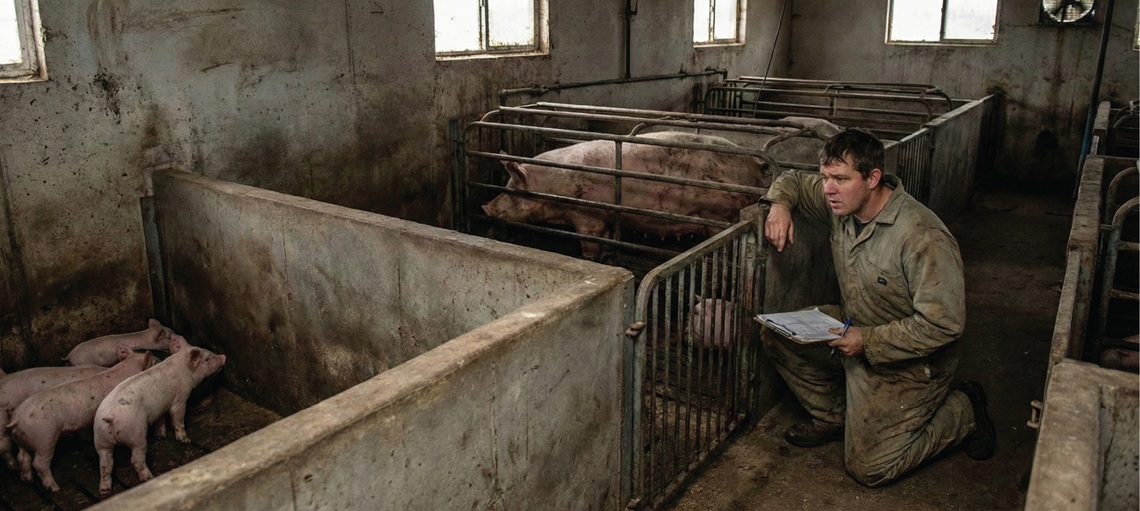
Missed or late detection of heat leads to delayed inseminations and extended non-productive sow days, which lowers herd reproductive efficiency. Research shows that precise timing of insemination improves conception rates and overall farm productivity. Farrowing supervision focused on accurate prediction of parturition can increase piglet survival by ensuring staff are present when sows give birth.
Continuous monitoring of sow behaviour and temperature can also support welfare assessment. Changes in activity and surface temperature occur during estrus and before farrowing, offering a measurable proxy that can support better decision making. A study using video-based activity time series showed that sow activity increases before farrowing and can be used to predict onset with high accuracy, suggesting practical applications for technology-assisted monitoring.
Precision Monitoring Solutions for Modern Sow Herds
Precision monitoring technologies collect continuous data on individual animals. Key indicators such as activity levels, posture changes, and body temperature provide early insights into physiological events.
| Biological Indicator | Management Insight |
| Activity spikes | Possible onset of estrus or farrowing behaviour |
| Temperature variations | Physiological changes linked to reproductive events |
| Movement patterns | Early detection of health issues or heat stress |
Infrared thermography and video-based monitoring have been researched for their potential to detect pre-farrowing temperature rises and behavioural changes, supporting prediction of parturition and improved supervision.
Technology-Driven Sow Management in Practice
Automated monitoring systems reduce dependence on manual observations and can generate alerts when key indicators exceed predefined thresholds. For example, spikes in activity coupled with rising body temperature may signal impending farrowing. Tools that integrate sensor data with farm management software help teams plan interventions, streamline breeding schedules, and allocate labour more effectively.
Historical data supports trend analysis and benchmarking. Farms can use longitudinal records of sow behaviour and reproductive outcomes to refine management protocols and identify areas for improvement.
Enter BioTag+: the Intelligent Monitoring Ear Tag for Sows
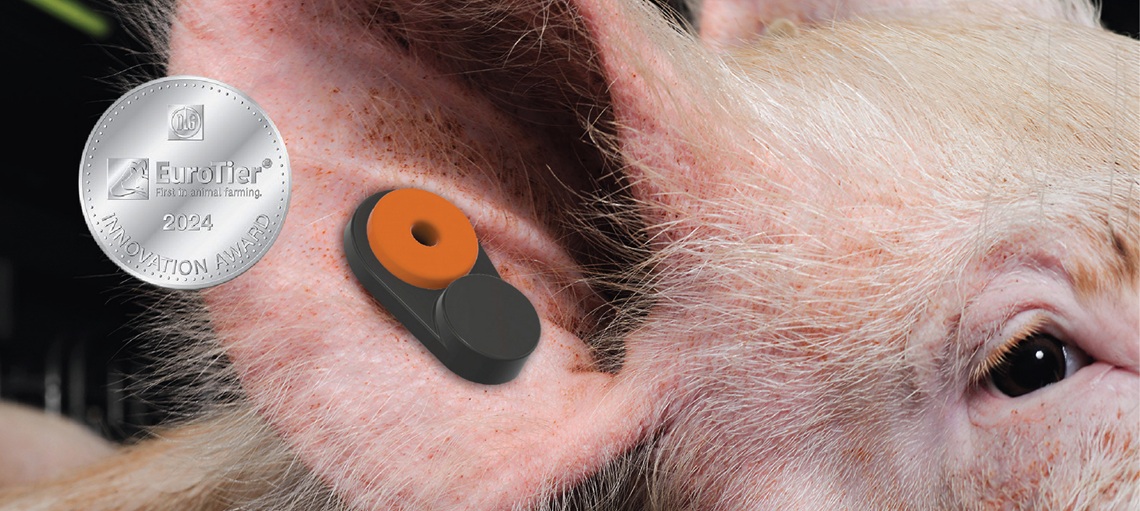
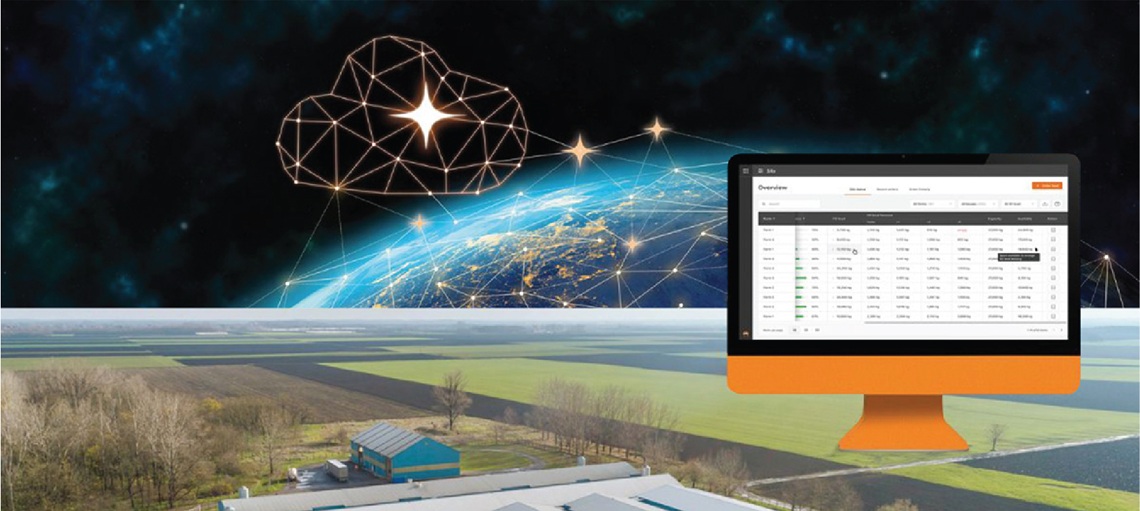
As the winner of the EuroTier Innovation Award 2024, the BioTag+ offers a wearable solution that captures continuous individual data from sows. Integrated temperature and motion sensors provide daily insights into an animal’s biological patterns. When linked with farm data platforms such as BFN Fusion, these insights turn raw sensor measurements into actionable information:
| Capability | Operational Benefit |
| Heat detection | Improved insemination timing |
| Activity trends | Early detection of abnormal behaviour |
| Temperature monitoring | Supports parturition planning |
| Individual tracking | Visibility even in group housing |
These capabilities support reproductive efficiency, welfare monitoring, and reduced labour dependency without introducing stress to animals.
Sow management is evolving from observation-based routines to data-assisted decision systems. Precision monitoring provides farms with continuous, individual-level insight that supports reproductive planning, welfare assessment, and labour efficiency. Technologies such as BioTag+ exemplify how real-time biological data can inform better management decisions. In the Asia Pacific region, where herd sizes are increasing and labour pressures are rising, precision sow monitoring offers a practical route to consistent, predictable, and welfare-aligned production outcomes.
References:
- Gómez, Y. et al. A Systematic Review on Validated Precision Livestock Technologies for Pig Welfare. Frontiers in Veterinary Science. https://www.frontiersin.org/articles/10.3389/fvets.2021.660565/full
- Blitek, A. et al. A Review of the Monitoring Techniques Used to Detect Oestrus in Pigs. PMC (Open Access).
https://www.ncbi.nlm.nih.gov/pmc/articles/PMC11816321/ - Liu, K. et al. Prediction of Sow Farrowing Onset Time Using Activity Time Series Extracted by Optical Flow. Animals (MDPI).
https://www.mdpi.com/2076-2615/15/7/998?utm_ - Gulliksen, S.M. et al. Infrared Thermography as a Technique for Estimating Onset of Parturition in Sows. Springer.
https://link.springer.com/article/10.1186/s40813-022-00301-x - Lei, K. et al. Research on Video Behavior Detection and Analysis in Pig Farming. MDPI Agriculture.
https://www.mdpi.com/2077-0472/15/9/975?utm_ - The News Market. Innovation Award EuroTier: Winners 2024.
https://www.thenewsmarket.com/news/innovation-award-eurotier%E2%80%93winners-2024/s/b61ee2fb-2b6d-4abd-a053-b2b52f6f23ff
Disclaimer:
This article is based on publicly available research and industry publications and is intended as a general guide for pig producers. While every effort has been made to ensure accuracy, the information provided should not replace professional veterinary advice or site-specific consultations. Production outcomes may vary based on local conditions, management practices, pig health, and other factors.