














The Hidden Cost of Poor House Tightness in Poultry Farms

House tightness plays a critical role in how poultry farms manage climate, energy use, and bird health. In the Asia Pacific region, where producers operate in hot and humid tropics as well as cold seasonal climates, uncontrolled air leakage reduces the effectiveness of ventilation systems and creates unstable living conditions for birds. These effects often go unnoticed during daily operations, yet they have a direct impact on productivity, feed efficiency, and mortality.
As poultry farms scale up and rely more heavily on automated ventilation, house tightness has become an operational variable that directly influences performance outcomes.
House Tightness Challenges Across Asia Pacific
Poultry houses in APAC face diverse environmental pressures. In countries such as Indonesia and the Philippines, high humidity, intense rainfall, and year-round heat accelerate material wear and structural degradation. In Japan, Korea and parts of Australia, houses must cope with large temperature differences between seasons, creating strong pressure gradients that expose weaknesses in building envelopes.
Over time, small gaps form around doors, service penetrations, wall joints, and fan housings. These gaps allow uncontrolled air movement that bypasses designed ventilation pathways. Research on commercial broiler houses shows that even well-maintained buildings experience significant air leakage, which interferes with pressure control and airflow distribution.
Uncontrolled leakage reduces the precision of ventilation systems and increases the energy required to maintain target temperatures. For producers operating year-round, these inefficiencies accumulate into higher costs and less consistent flock environments.
Common Air Leakage Points in Poultry Houses
Air leakage occurs most frequently at predictable locations. Identifying these areas allows farms to prioritise corrective action.
| Leakage Area | Typical Cause | Operational Impact |
| Doors and access points | Worn seals or misalignment | Loss of pressure control |
| Wall and roof joints | Ageing materials or movement | Unplanned air entry |
| Pipe and cable penetrations | Inadequate sealing | Air bypassing inlets |
| Fan housings | Poor sealing or wear | Reduced airflow efficiency |
| Inlet frames | Warping or gaps | Uneven air distribution |
In warm climates, these leaks allow hot, humid air to enter at unintended locations. In cooler conditions, warm air escapes, increasing heating demand and creating drafts at bird level.
Impact on Bird Performance and Health
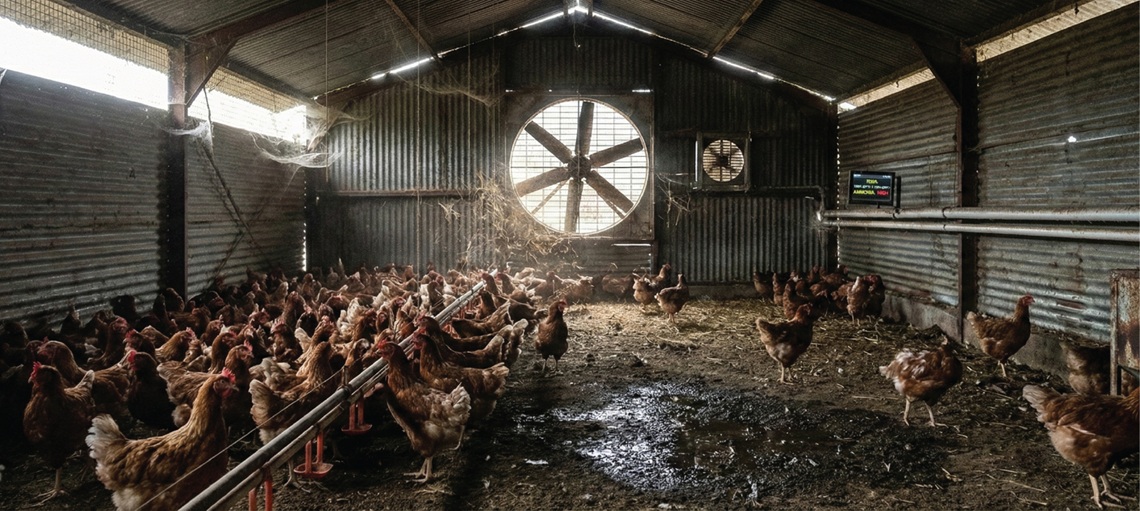
Poor house tightness affects bird performance through its influence on airflow and temperature stability. When air enters through unintended gaps, it often short-circuits directly to exhaust fans rather than mixing evenly within the house. This creates temperature gradients, uneven litter moisture, and inconsistent oxygen levels.
Birds exposed to fluctuating temperatures reduce feed intake. Studies consistently link unstable thermal environments to poorer feed conversion and reduced growth rates. Uneven airflow also contributes to wet litter and elevated ammonia levels, which damage respiratory health and increase susceptibility to disease.
Mortality risk increases when birds experience cold stress or drafts, particularly during early life stages. Even brief periods of environmental instability can have lasting effects on uniformity and final performance.
Assessing House Tightness and Key Indicators
Measuring house tightness allows producers to move from assumption to evidence-based management. Several assessment methods are widely used in commercial poultry systems.
| Assessment Method | Purpose |
| Static pressure testing | Quantifies air leakage under controlled conditions |
| Fan performance checks | Confirms airflow delivery matches design |
| Smoke testing | Visualises unintended air pathways |
| Temperature mapping | Identifies cold spots and airflow imbalance |
| Energy monitoring | Highlights inefficiencies over time |
Improved house tightness is reflected in stable static pressure, predictable inlet behaviour, more uniform temperatures, and reduced heating or cooling runtime.
Role of Ventilation Systems in Tight Houses
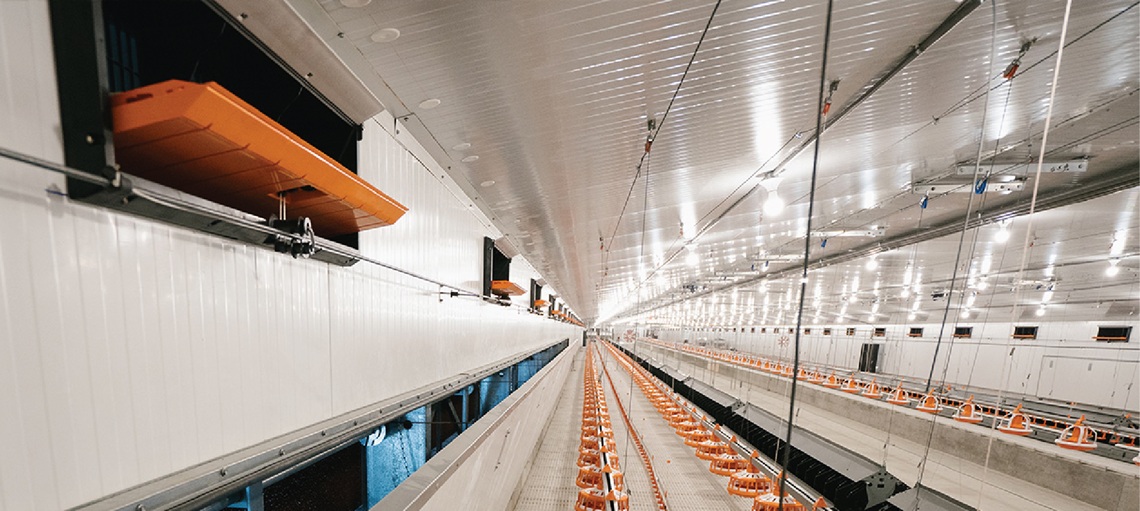
Modern ventilation systems depend on precise pressure control to function effectively. When houses are tight, air enters through designated inlets at the correct speed and direction, supporting proper mixing and stable conditions at bird level.
Extension and industry research consistently show that ventilation efficiency improves when leakage is reduced. Tight houses allow minimum ventilation to deliver fresh air without chilling birds, while tunnel and transitional ventilation operate more predictably during heat events.
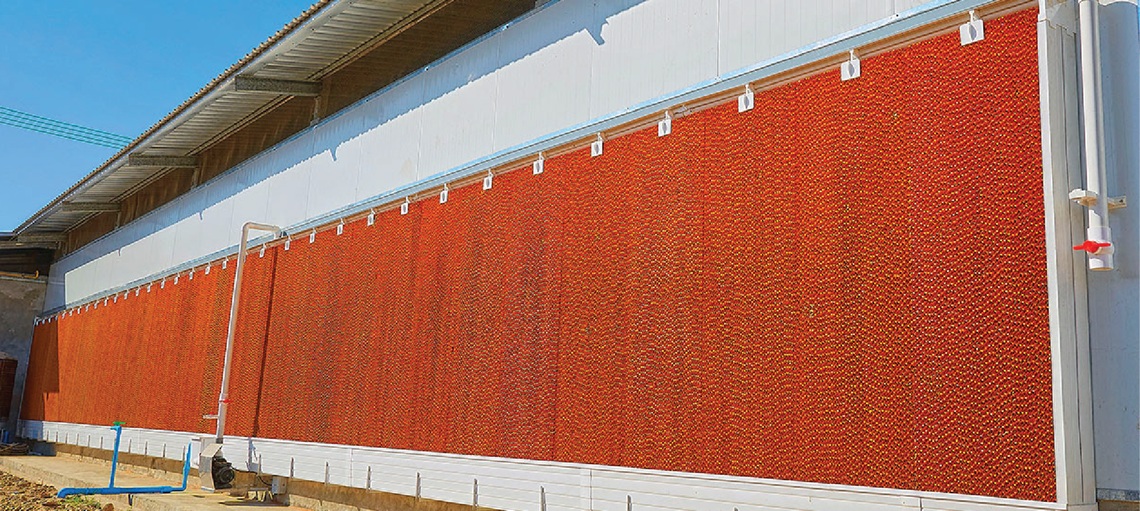
In hot climates, controlled airflow improves evaporative cooling efficiency. In colder conditions, it allows farms to maintain air quality while minimising heat loss.
Practical Measures to Improve House Tightness
Improving house tightness often involves routine maintenance rather than major reconstruction. Incremental improvements can deliver meaningful results.
| Improvement Area | Practical Action |
| Door seals | Replace worn gaskets and ensure proper closure |
| Service penetrations | Seal pipes and cables with durable materials |
| Inlet maintenance | Repair frames and ensure smooth operation |
| Fan housings | Inspect and reseal mounting points |
| Structural joints | Apply weather-resistant sealing compounds |
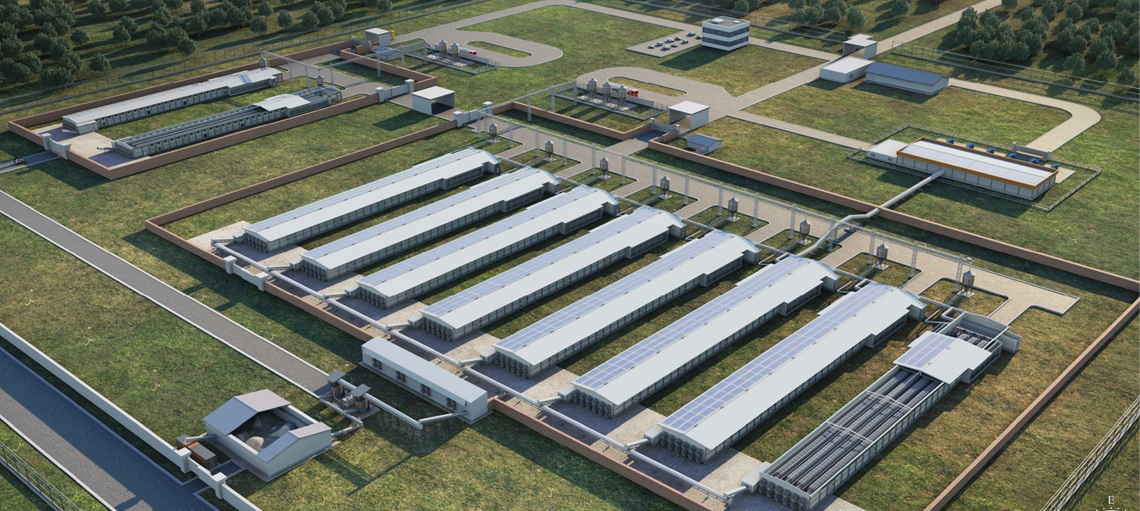
Regular inspection after each production cycle helps prevent gradual degradation and preserves ventilation performance. Of course, when there is an opportunity for larger investments, considering a closed-house operation using pre-engineered buildings ensures maximum air tightness and efficient production.
House tightness influences nearly every aspect of poultry house environmental control. In the varied climates of Asia Pacific, uncontrolled air leakage undermines ventilation efficiency, increases energy use, and exposes birds to unnecessary stress. By identifying leakage points, measuring performance, and maintaining building integrity, producers can stabilise house environments and improve production consistency.
As poultry operations modernise and rely more heavily on automated systems, house tightness should be treated as a core operational parameter. Farms that invest in tighter buildings gain greater control over climate, stronger foundations for biosecurity, and more predictable production outcomes.
References:
- Czarick, M. Five Major Challenges with Installing Air Filtration in Poultry Houses. Modern Poultry Media.
https://modernpoultry.media/czarick-five-major-challenges-with-installing-air-filtration-in-poultry-houses/?mp=1767752462336 - Czarick, M., Fairchild, B. Assessing Air Leakage in Commercial Broiler Houses.
https://www.researchgate.net/publication/271420812_Assessing_Air_Leakage_in_Commercial_Broiler_Houses - The Poultry Site. Key Factors for Poultry House Ventilation.
https://www.thepoultrysite.com/articles/key-factors-for-poultry-house-ventilation - University of Kentucky, Martin-Gatton College of Agriculture. Recommendations Based on Evaluation of Ventilation Systems.
https://afs.mgcafe.uky.edu/poultry/chapter-1-recommendations-based-on-evaluation-of-ventilation-systems - Veterinaria Digital. Importance of Ventilation in Poultry Farming.
https://www.veterinariadigital.com/en/articulos/importance-of-ventilation-in-poultry-farming/
Disclaimer:
This article is based on publicly available research and industry publications and is intended as a general guide for poultry producers. While every effort has been made to ensure accuracy, the information provided should not replace professional veterinary advice or site-specific consultations. Production outcomes may vary based on local conditions, management practices, bird genetics, and other factors.