














Ammonia, Moisture and Multi-Tier Aviaries: Environmental Control in Humid Asia

Cage-free egg production is expanding across Asia. Retail commitments, evolving consumer expectations, and regulatory shifts are accelerating the transition toward aviary-based systems.
Compared to conventional cages, cage-free systems introduce continuous interaction between birds, litter, manure, and air. Environmental conditions are no longer contained within a controlled cage structure. They move across the entire house.
In humid climates, this becomes more complex. Temperature, moisture, and airflow are closely linked, and small imbalances can quickly affect both bird performance and working conditions, and at the centre of this interaction is ammonia.
The Ammonia Challenge in Humid Conditions
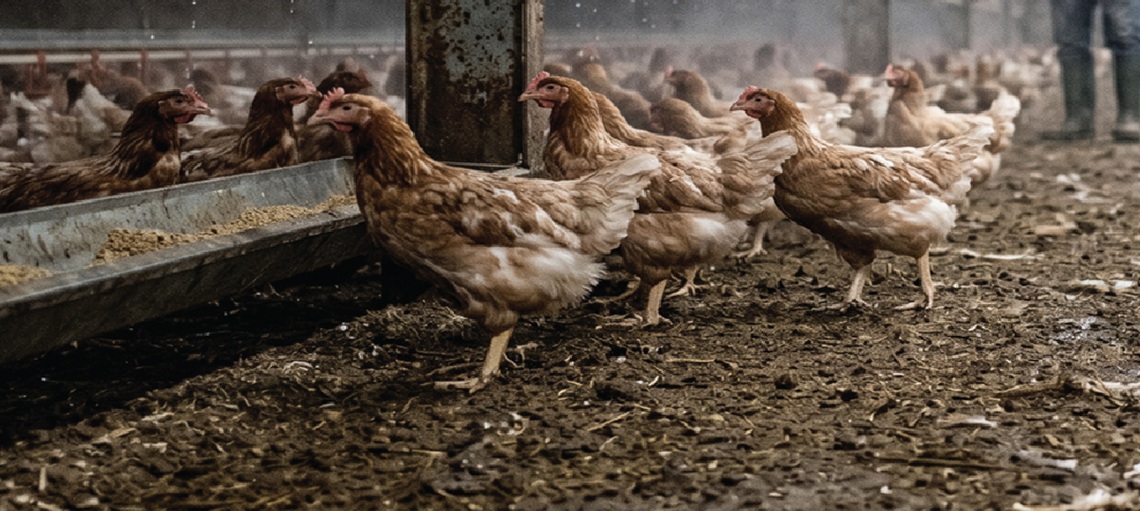
Ammonia (NH₃) is produced during the microbial breakdown of manure. Its release is closely tied to moisture levels in the litter.
In humid environments, litter retains moisture for longer periods. This creates conditions that accelerate ammonia formation. Research and industry guidelines show that:
- Litter moisture above 25% to 30% significantly increases ammonia release
- High humidity slows drying, allowing ammonia to accumulate over time Aviagen
In many parts of Southeast Asia, ambient humidity regularly exceeds 70%, creating a persistent challenge for maintaining dry litter conditions.
Sources of Ammonia in Layer Houses:
| Source | Contribution |
| Manure accumulation | Primary ammonia source |
| Wet litter | Accelerates ammonia release |
| Poor ventilation | Traps and concentrates gases |
Impact on Birds and Operations
Ammonia is not only an environmental issue. It directly affects production outcomes.
Studies show that ammonia concentrations above 20–25 ppm can begin to impact poultry health and performance, including respiratory stress and reduced productivity. At higher levels, the effects become more pronounced:
- Reduced feed intake and poorer feed conversion
- Increased susceptibility to respiratory disease
- Decline in egg production and shell quality
There are also implications for workers. Prolonged exposure to elevated ammonia levels affects air quality and comfort within the house, particularly in enclosed systems. In cage-free systems, maintaining consistent air quality is more demanding due to bird movement across multiple levels.
Why Aviary Design Matters More in Humid Asia
Aviary systems are built to support natural bird behaviour, including perching, nesting, and movement across vertical space.
This vertical structure introduces additional environmental considerations:
- Airflow must reach all tiers
- Moisture must be managed across both litter and manure systems
- Bird distribution affects heat and humidity patterns
Without a structured design, these factors can lead to uneven conditions within the house.
Key Aviary Design Requirements:
| Design Feature | Operational Benefit |
| Vertical zoning | Supports controlled bird movement and distribution |
| Manure belt systems | Reduces moisture buildup and ammonia formation |
| Structured nesting areas | Minimises floor eggs and litter disruption |
Integrating Environmental Control Through System Design
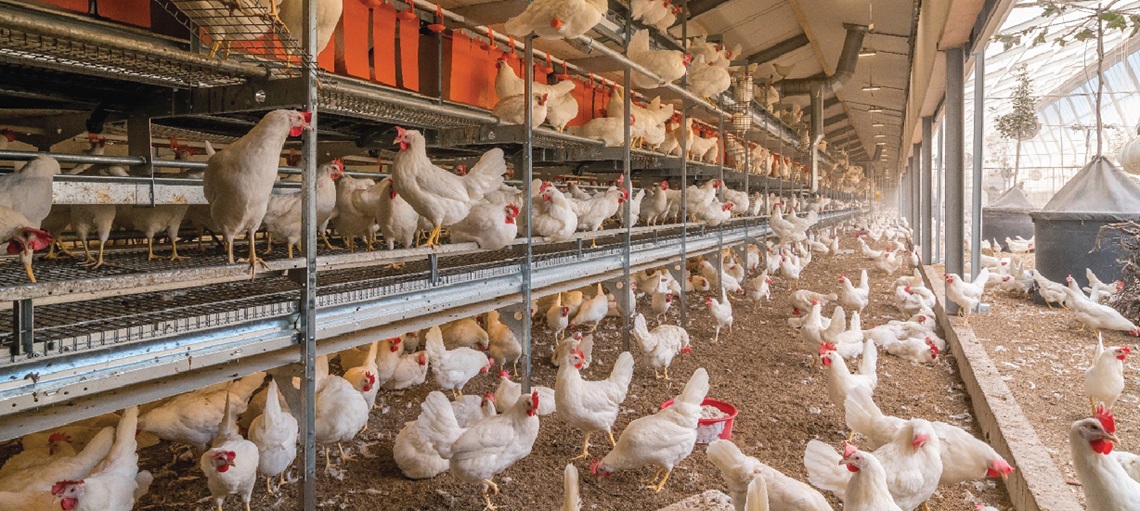
Modern aviary systems are increasingly designed as integrated environments. The NATURA aviary range by Big Dutchman, including systems such as NATURA Visio, reflects this approach by combining housing design with manure management and ventilation compatibility.
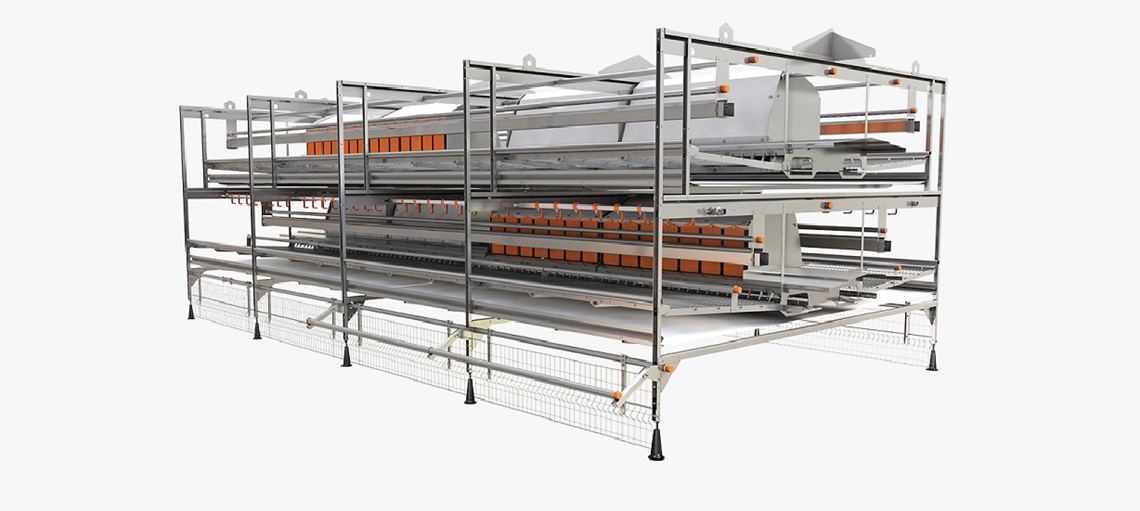
These systems are built around several key principles:
Structured Multi-Tier Layout
Birds are distributed across defined levels, supporting more predictable movement and reducing overcrowding.
Integrated Manure Removal
Manure belt systems remove waste at regular intervals, reducing moisture accumulation and limiting ammonia formation at source.
Ventilation Compatibility
Aviary structures are aligned with modern ventilation strategies, allowing airflow to reach all tiers and support consistent drying.
System Integration
The aviary works alongside feeding, drinking, and climate systems, creating a coordinated production environment rather than isolated components.
This reduces reliance on reactive adjustments and supports more stable conditions over time.
The Role of Ventilation and Airflow
Ventilation remains the primary method for controlling ammonia. In humid climates, it must achieve two outcomes:
- Remove moisture from litter and manure
- Dilute and remove ammonia from the air
Technical guidelines highlight that effective ventilation is essential to limit ammonia accumulation and maintain air quality in poultry housing. In multi-tier systems, airflow distribution becomes critical. Poor airflow can create pockets of high humidity and ammonia concentration.
Well-designed ventilation systems help ensure:
- Uniform air movement across levels
- Consistent litter drying
- Stable internal conditions
Moving from Reactive to Structured Environmental Management
Traditional ammonia control often relies on reactive measures such as adjusting ventilation rates or applying litter treatments.
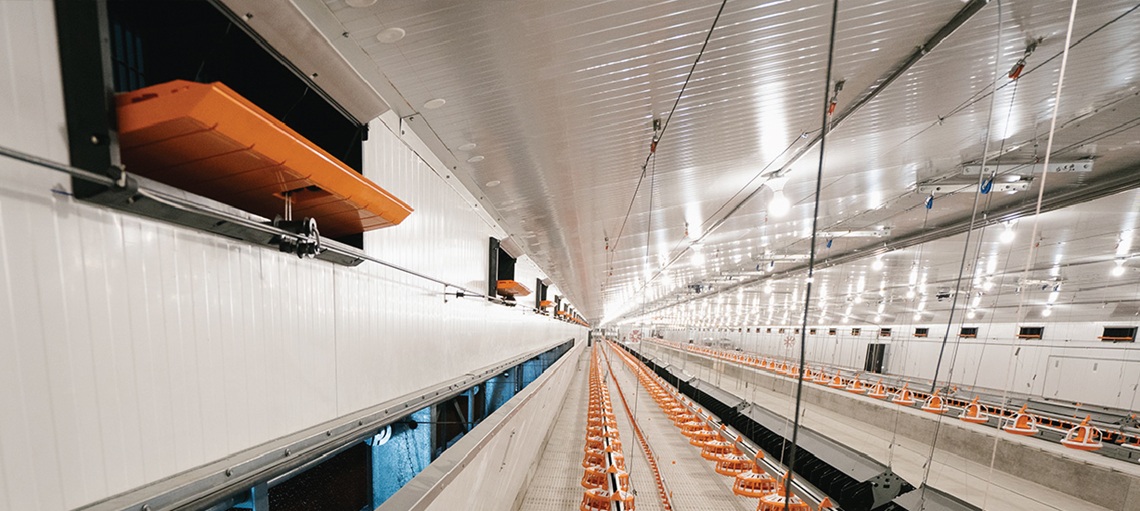
In cage-free systems, particularly in humid climates, this approach has limitations. There is a shift toward structured environmental management, where system design plays a central role.
This includes:
- Aviary layouts that support airflow and bird distribution
- Regular manure removal integrated into system design
- Ventilation systems aligned with house structure
- Monitoring systems that track environmental conditions in real time
Industry practice increasingly emphasises combining these elements to manage ammonia more consistently.
Cage-free production introduces new opportunities, but also new environmental challenges. In humid climates, ammonia, moisture, and airflow are closely linked. Managing them effectively requires more than operational adjustments. It requires systems that are designed with these conditions in mind.
As cage-free production continues to expand across Asia, the ability to control these variables will play a central role in long-term performance and sustainability.
References:
- Food and Agriculture Organization (FAO). Poultry Development Review
https://www.fao.org/3/i3531e/i3531e.pdf - Journal of Applied Poultry Research. Effects of Atmospheric Ammonia on Laying Hens and Poultry Production
https://academic.oup.com/japr/article/24/3/399/758689 - Aviagen. Broiler Management Handbook
https://aviagen.com/assets/Tech_Center/BB_Resources_Tools/ManagementGuides/Aviagen-Broiler-Management-Handbook.pdf - North Carolina State University Extension. Poultry Housing Tips for Litter Management
https://content.ces.ncsu.edu/poultry-housing-tips-litter-management - University of Georgia Extension. Ammonia Production in Poultry Houses and Management Strategies
https://extension.uga.edu/publications/detail.html?number=B1240 - Poultry World. How to Control Ammonia in Poultry Houses
https://www.poultryworld.net/health-nutrition/how-to-control-ammonia-in-poultry-houses/ - Big Dutchman. NATURA Aviary System for Enhanced Efficiency and Bird Welfare
https://www.bigdutchman.asia/en/resources/news/natura-aviary-system-for-enhanced-efficiency-and-bird-welfare
Disclaimer:
This article is based on publicly available research and industry publications and is intended as a general guide for poultry producers. While every effort has been made to ensure accuracy, the information provided should not replace professional veterinary advice or site-specific consultations. Production outcomes may vary based on local conditions, management practices, bird genetics, and other factors.