














From Feed to Food Security: Strengthening Poultry Supply Chains in Asia

Poultry has become one of the most important protein sources across Asia. It is efficient to produce, widely accepted, and central to both urban and rural food systems. As demand continues to grow, attention is shifting beyond how much can be produced to how reliably that supply can be maintained.
At the centre of this conversation is feed.
Feed typically accounts for 60 to 70 percent of total poultry production cost, making it the single largest variable in the system. At the same time, it is also one of the least controlled elements, shaped by global commodity markets, logistics, and environmental conditions.
This creates a structural tension. Poultry production is local. Feed systems are often external and variable.
A System Shaped by External Forces
The pathway from raw ingredients to finished feed is influenced by a chain of interconnected factors.
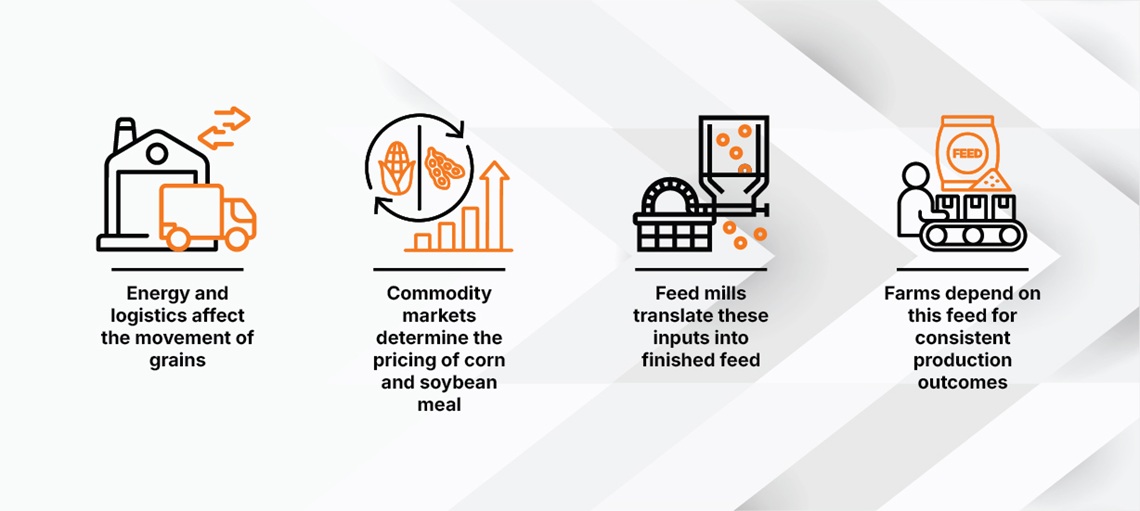
Across Asia, this dynamic is amplified by import dependency. Many countries rely heavily on imported corn and soybean meal to meet feed demand. According to the Food and Agriculture Organization, this dependence continues to shape cost structures and supply consistency across the region. This means that feed availability, pricing, and quality are influenced by factors beyond the farm.
What the Market Is Showing Today
Recent patterns across the region point to gradual adjustment rather than abrupt change.
- Feed prices are moving in stages
- Procurement cycles are becoming shorter and more cautious
- Feed formulation is being reviewed more frequently, with greater flexibility in ingredient use.
At the same time, variability is becoming more visible.
Producers are paying closer attention to consistency. Small changes in ingredient quality or formulation can lead to measurable differences in performance across flocks.
This is where supply stability begins to connect directly with production outcomes.
The Sensitivity of the System
Poultry production operates within tight biological and economic margins.
A shift of 0.05 to 0.10 in feed conversion ratio (FCR) can significantly increase cost per kilogram of live weight. When feed represents the majority of cost, these changes accumulate quickly.
| Performance Variable | Impact on Production |
| +0.05 FCR | Noticeable increase in feed cost per bird |
| +0.10 FCR | Significant margin compression |
| 1–2% increase in mortality | Direct loss in output |
This sensitivity places greater importance on consistency across the entire production system.
From Input Dependency to System Visibility
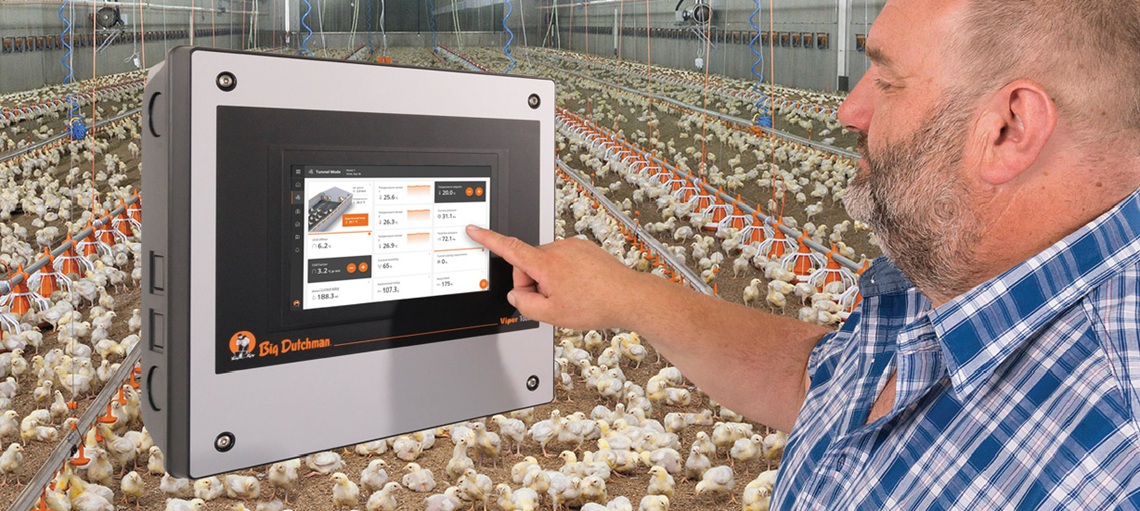
As variability becomes more apparent, there is a shift toward improving visibility across operations. Digital monitoring systems are playing a growing role in this transition.
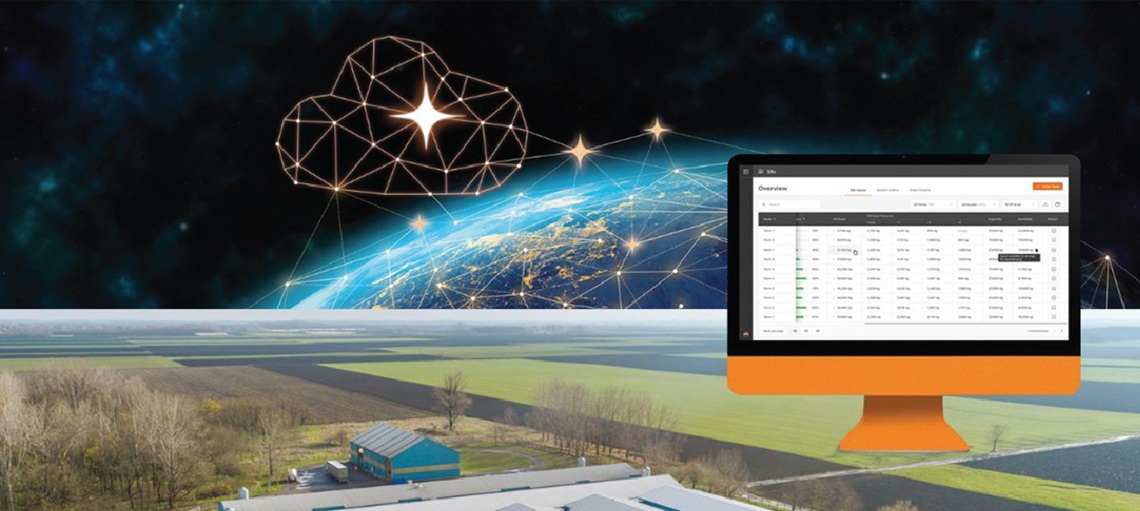
Platforms such as Big Dutchman’s digital management systems, including solutions like BFN-Fusion, enable producers to track:
- Feed consumption and flow
- Growth performance trends
- Environmental conditions
- System-level deviations
By connecting feed, environment, and animal performance data, these systems allow earlier identification of inconsistencies. In this context, digitalisation supports stability. It allows producers to respond to changes before they affect overall output.
Stabilising Performance Through Environmental Control
Environmental conditions have a direct influence on how effectively feed is utilised.
In many parts of Asia, high temperatures and humidity can affect feed intake, growth rates, and FCR. Variations in ventilation and temperature lead to uneven performance across flocks.
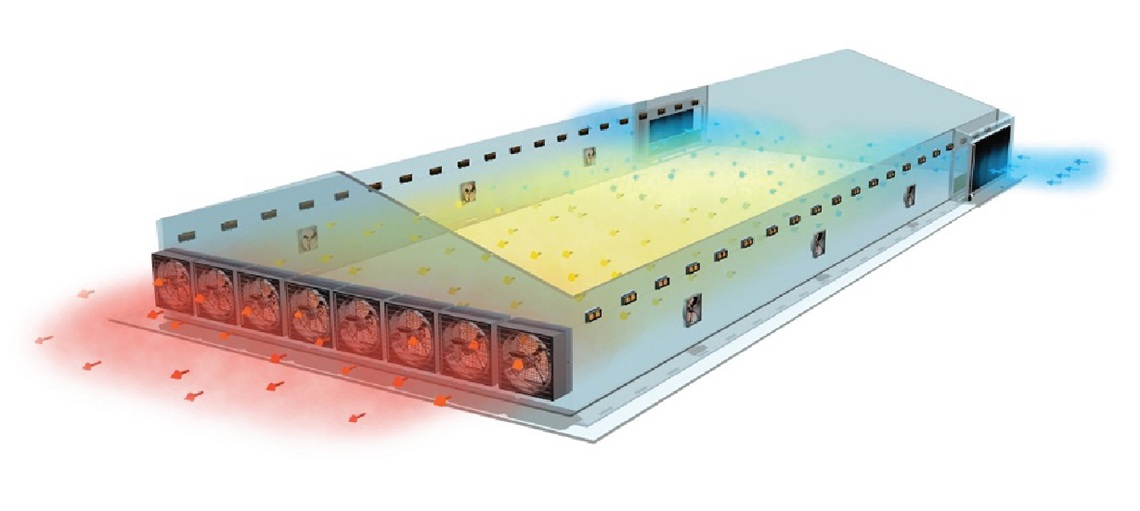
Climate control systems, including tunnel ventilation and automated environmental management, help maintain consistent conditions within the house.
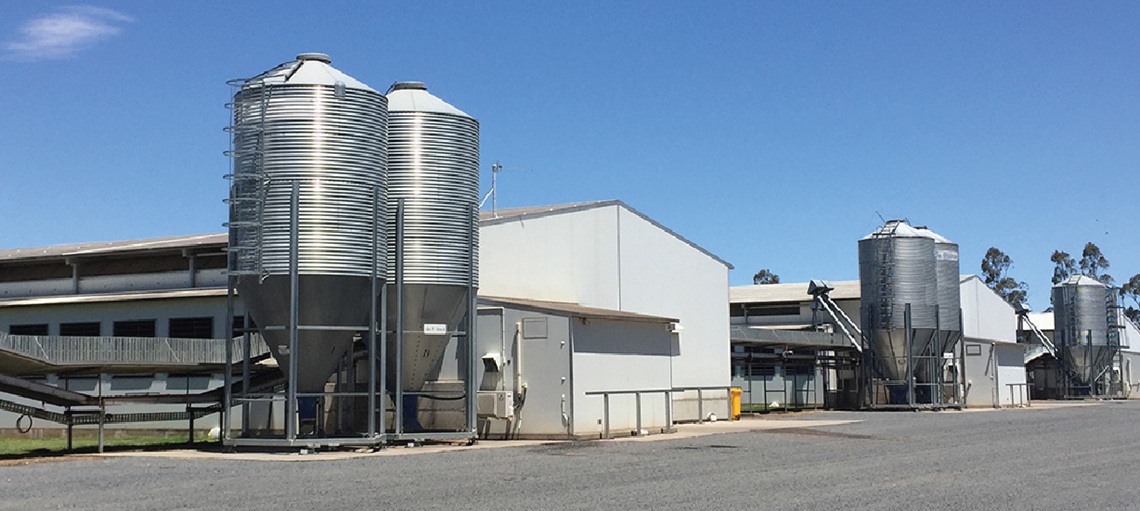
By stabilising temperature, airflow, and humidity, these systems support more predictable feed conversion and growth performance.
This becomes increasingly important when feed costs are high and variable.
Feeding Systems and the Cost of Inefficiency
How feed is delivered is as important as the feed itself. Modern automated feeding systems are designed to ensure:
- Even distribution across the house
- Reduced feed wastage
- Consistent access for all birds
When feed represents the majority of production cost, small inefficiencies in distribution or intake can translate into measurable financial impact.
Systems that improve precision and consistency in feeding help protect performance under variable input conditions.
Rethinking Feed at the Source
Alongside improvements within the house, there is also a broader shift toward gaining more control over feed sourcing and processing. One area of growing interest is on-farm feed milling.
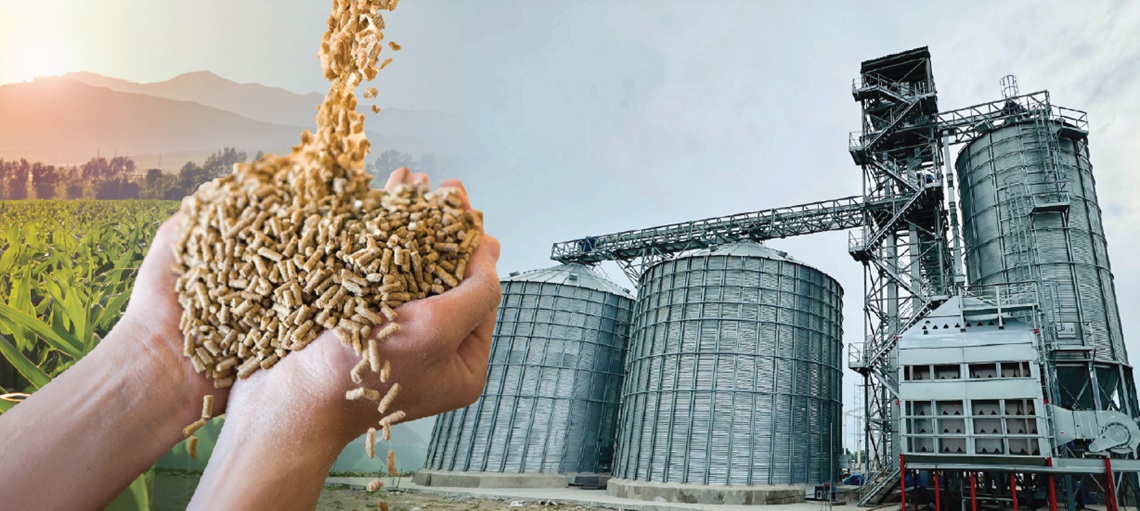
Solutions such as Big Dutchman’s Feed-Mill-on-Farm systems allow producers to bring parts of the feed production process closer to their operations.
This enables:
- Greater control over ingredient selection and quality
- The ability to utilise local or regionally sourced raw materials
- Reduced dependency on external supply chains and transport
- Improved traceability and biosecurity
On-farm milling also supports more integrated farm management, where feed production, livestock production, and resource utilisation are more closely connected. In this context, feed becomes a managed input rather than a fixed external dependency.
As external conditions continue to evolve, the ability to maintain consistency across feed quality, availability, and utilisation is becoming increasingly important. Strengthening poultry supply is not only about producing more, it is also about building systems that can sustain production under changing conditions.
References:
- Food and Agriculture Organization (FAO). World Food and Agriculture – Statistical Yearbook
2023.https://www.fao.org/documents/card/en/c/cc8166en - OECD-FAO. Agricultural Outlook 2024–2033.
https://www.oecd.org/en/publications/oecd-fao-agricultural-outlook-2024-2033_4c5d2cfb-en.html - USDA Foreign Agricultural Service. Philippines Grain and Feed Annual.
https://www.fas.usda.gov/data/philippines-grain-and-feed-annual - USDA Foreign Agricultural Service. Indonesia Grain and Feed Annual.
https://www.fas.usda.gov/data/indonesia-grain-and-feed-annual - International Grains Council. Grain Market Report.
https://www.igc.int/en/gmr_summary.aspx - Food and Agriculture Organization (FAO). The Future of Livestock in Asia and the Pacific.
https://www.fao.org/3/i3437e/i3437e.pdf - Alltech. Agri-Food Outlook 2024.
https://www.alltech.com/agri-food-outlook
Disclaimer:
This article is based on publicly available research and industry publications and is intended as a general guide for poultry producers. While every effort has been made to ensure accuracy, the information provided should not replace professional veterinary advice or site-specific consultations. Production outcomes may vary based on local conditions, management practices, bird genetics, and other factors.