














Managing Heat Load in Finishing Pigs Across Southeast Asia

Pig production across Southeast Asia is increasingly shaped by temperature. In countries such as Thailand, Vietnam, and Indonesia, daytime temperatures frequently exceed 30°C, with periods of sustained heat becoming more common. For finishing pigs, this presents a structural challenge.
Unlike other livestock, pigs have limited ability to dissipate heat. They do not sweat effectively and rely on respiration and behaviour to regulate body temperature. As pigs approach finishing weight, their metabolic heat production increases, placing them closer to their thermal limits even under normal conditions. And when ambient temperatures rise, this balance is quickly disrupted.
How Pigs Respond to Heat Stress
Heat stress in pigs follows a predictable pattern.
The first response is a reduction in feed intake. This lowers internal heat production but also slows growth. As temperatures continue to rise, additional physiological and behavioural changes occur:
- Increased respiration rate and panting
- Reduced activity and movement
- Greater susceptibility to disease
| Temperature Range | Pig Response |
| 25–28°C | Mild stress, reduced feed intake begins |
| 28–32°C | Noticeable reduction in growth performance |
| >32°C | Severe heat stress, significant performance loss |
These thresholds are particularly relevant across Southeast Asia, where environmental conditions regularly fall within or exceed these ranges.
Impact on Growth and Production Economics
The biological response to heat stress translates directly into economic impact. Reduced feed intake leads to slower weight gain. At the same time, a greater proportion of consumed energy is used for maintenance rather than growth. This affects both efficiency and output.
Under moderate heat stress conditions, feed intake can decline by 5 to 10 percent or more. As a result:
- Average daily gain decreases
- Feed conversion ratio worsens
- Finishing periods are extended
Production Effects of Heat Stress
| Factor | Impact |
| Feed intake | Decreases |
| Growth rate (ADG) | Slower |
| Feed conversion ratio (FCR) | Worsens |
| Days to market | Increased |
| Cost per kg | Higher |
Even small changes in these parameters can significantly affect profitability when scaled across large finishing operations.
Heat Load as a System-Level Challenge
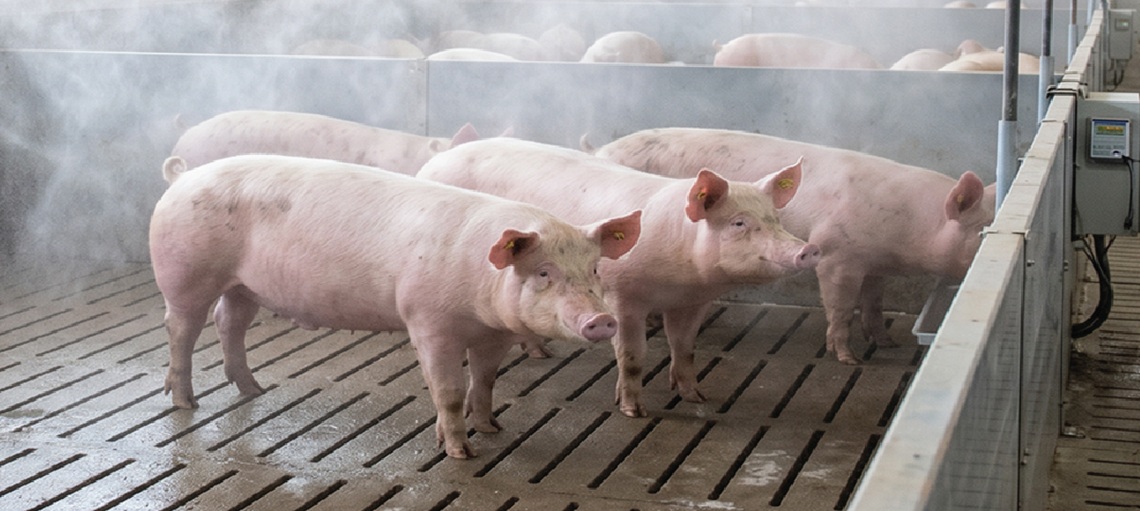
Heat stress is often treated as a seasonal issue. In practice, it is a system-level constraint.
Internal house conditions are influenced by multiple interacting factors:
- External temperature and humidity
- Building design and insulation
- Stocking density and animal weight
- Airflow and ventilation performance
As pigs grow, their heat output increases. Without effective removal of this heat, internal temperatures can exceed ambient conditions, creating a compounding effect.
This means that heat stress is not only a function of climate, but of how the housing system is designed and managed.
Ventilation as the Primary Control Mechanism
Ventilation is the primary method for managing heat load in pig houses. The objective is not only to supply fresh air, but to remove excess heat and maintain consistent airflow across the animals. Effective systems achieve:
- High and consistent air exchange rates
- Uniform airflow distribution throughout the house
- Removal of heat, moisture, and gases
In finishing operations, air velocity becomes especially important. Faster airflow across the pigs increases convective heat loss, helping animals maintain body temperature.
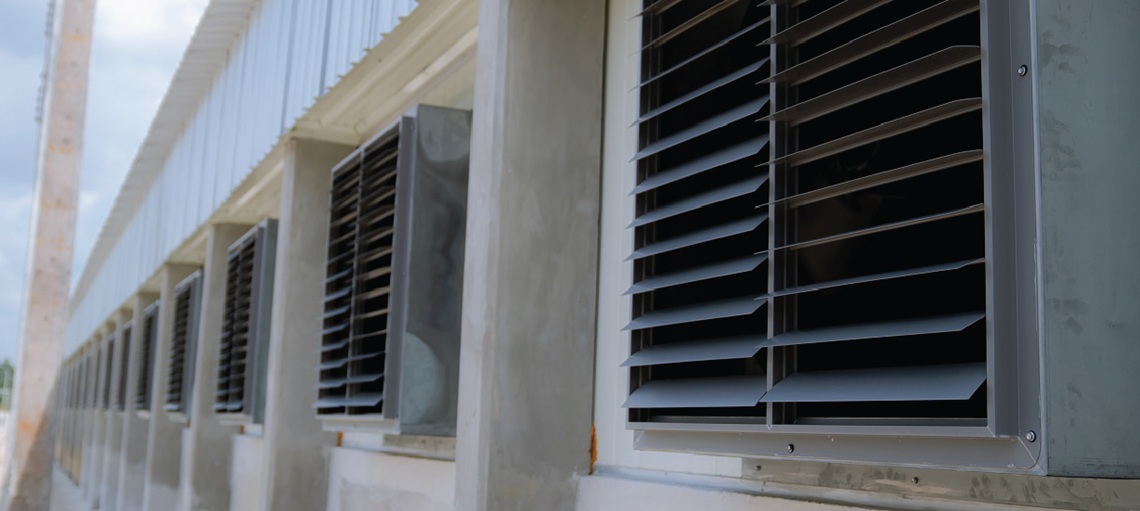
Tunnel ventilation systems are widely used in tropical climates for this reason. When properly designed, they create a controlled air stream that moves uniformly through the house, improving cooling effectiveness.
The Role of Cooling Systems in Tropical Conditions
In many parts of Southeast Asia, ventilation alone is not sufficient. When incoming air is already warm, additional cooling is required to maintain acceptable conditions inside the house.
Common cooling approaches include:
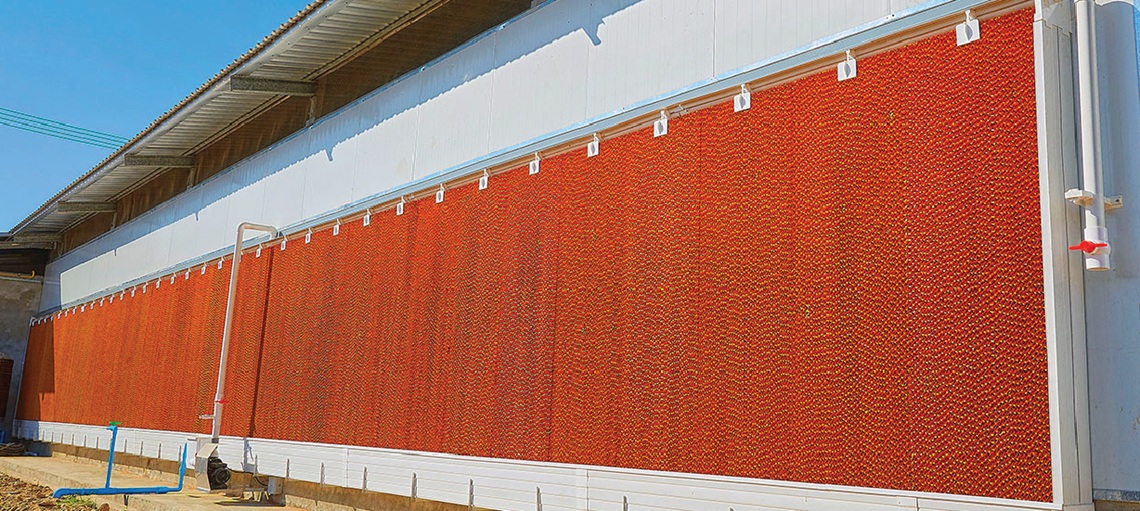
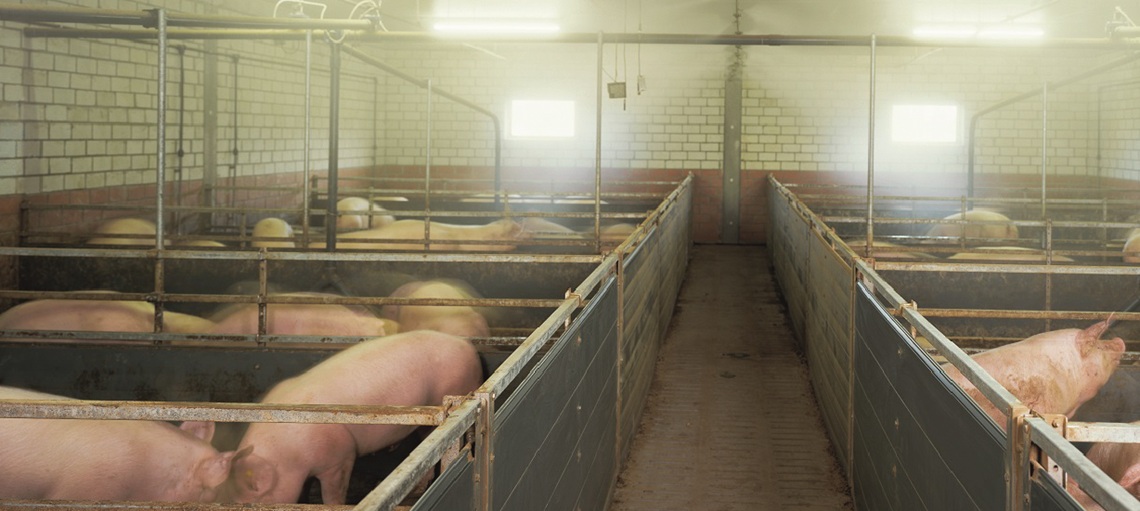
These systems lower the temperature of incoming air before it reaches the animals, improving the overall cooling effect. In humid environments, system balance is important. Cooling must be managed carefully to avoid excessive moisture, which can reduce the effectiveness of heat removal and create additional stress.
Aligning Infrastructure with Animal Needs
As heat pressure increases, infrastructure plays a more direct role in production outcomes.
Ventilation and cooling systems are no longer secondary considerations. They are central to maintaining growth performance.
Modern pig housing systems are designed to integrate:
- Ventilation layouts that match building dimensions and stocking density
- Cooling systems adapted to local climate conditions
- Airflow strategies that ensure consistent conditions across all pens
This alignment reduces variability within the house and supports more predictable growth performance.
Moving Toward Structured Environmental Control
Traditional approaches to heat management often rely on manual adjustments based on observation.
There is a gradual shift toward more structured and automated control.
This includes:
- Ventilation systems that adjust airflow automatically based on temperature
- Cooling systems that respond dynamically to changing conditions
- Monitoring tools that provide visibility across different zones within the house
These systems reduce reliance on manual intervention and support more consistent environmental control.
Heat stress is becoming a defining constraint in pig production across Southeast Asia. As temperatures rise and variability increases, maintaining consistent growth performance requires more than incremental adjustments. It requires systems designed to manage heat as a core factor.
Ventilation and cooling play a central role in this process. When properly integrated, they support stable conditions, better feed utilisation, and more predictable production outcomes. In this context, managing heat load is not only about animal comfort. It is about protecting performance and sustaining efficiency across the finishing cycle.
References
- Ontario Ministry of Agriculture, Food and Rural Affairs (OMAFRA). Avoid Production Losses in Swine Due to Heat Stress.
https://www.ontario.ca/page/avoid-production-losses-swine-due-heat-stress - University of Minnesota Extension. Heat Stress in Swine Affects Production.
https://extension.umn.edu/swine-production-management/heat-stress-swine-affects-production - Iowa Pork Industry Center. Swine Feed Efficiency: Influence of Temperature.
https://www.ipic.iastate.edu/files/documents/IPIC25f.pdf - Iowa Pork Industry Center. Prepping the Barn for Summer: Ventilation and Cooling Tips.
https://www.ipic.iastate.edu/news/summer-ventilation-and-cooling-tips - University of Minnesota Extension. Proper Ventilation is Key to Maintaining Animal Health.
https://blog-swine.extension.umn.edu/2021/05/proper-ventilation-is-key-to.html - Asian-Australasian Journal of Animal Sciences. Managing Heat Stress in Pigs in Asia.
https://ew-nutrition.com/us/managing-heat-stress-in-pigs-in-asia/ - National Center for Biotechnology Information (NCBI). Heat Stress Adaptations in Pigs.
https://pmc.ncbi.nlm.nih.gov/articles/PMC6951998/ - Food and Agriculture Organization (FAO). Climate Change and Livestock in Asia and the Pacific.
https://www.fao.org/3/i3437e/i3437e.pdf
Disclaimer:
This article is based on publicly available research and industry publications and is intended as a general guide for pig producers. While every effort has been made to ensure accuracy, the information provided should not replace professional veterinary advice or site-specific consultations. Production outcomes may vary based on local conditions, management practices, animal health, and other factors.